

Christopher Harley (He/Him) | PI
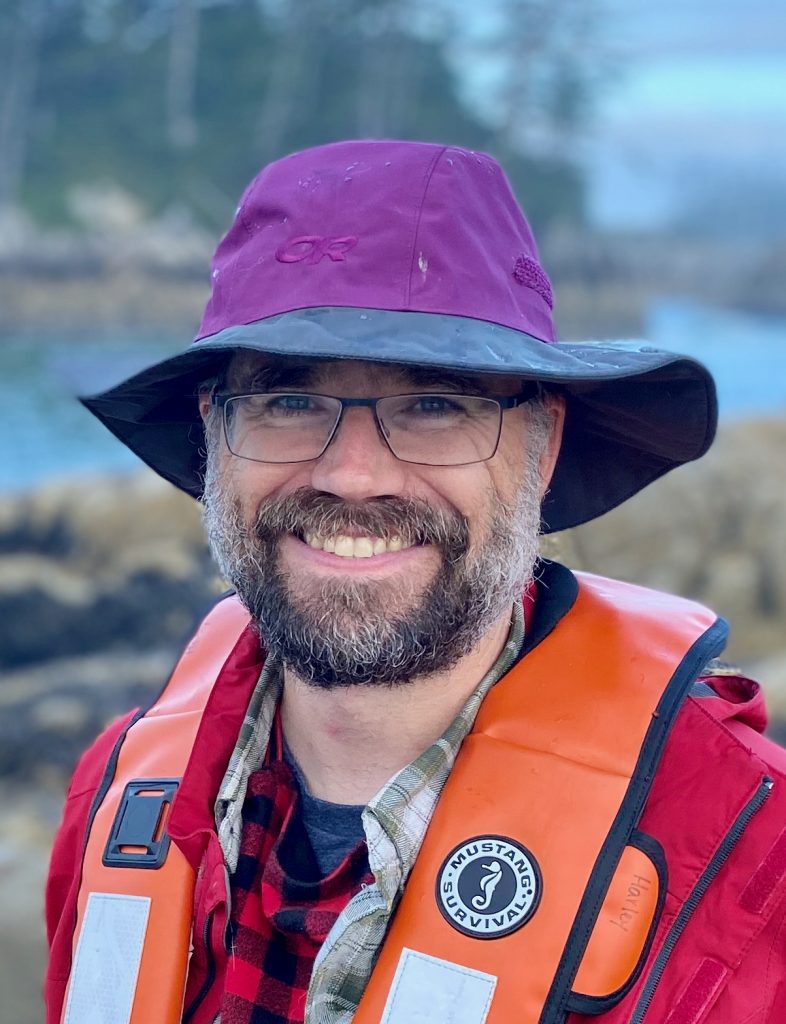
I am a community ecologist interested in how and why coastal marine ecosystems vary in space and time. Much of my research focuses on the effects of climate change stressors – temperature, ocean acidification, altered salinity – on the plants and animals that live on rocky shores, and how interactions between species determine how ecosystems respond to environmental change. I am particularly interested in the ecological implications of complex patterns of environmental variation, including combined stressor scenarios and rare extremes like heatwaves and cold snaps. Integrating ecologically relevant patterns of change with interactions like keystone predation and facilitation by foundation species helps us better understand patterns of biodiversity in the nearshore environment and beyond. In our research, my students and I combine manipulative experiments in the lab and field with long-term observations and historical resurveys. Our work also touches on invasive species impacts, ecophysiology, biogeography, and the natural history of the weird and wonderful fauna and flora of the intertidal zone.
Paradyse Blackwood (They/Them) | Postdoc
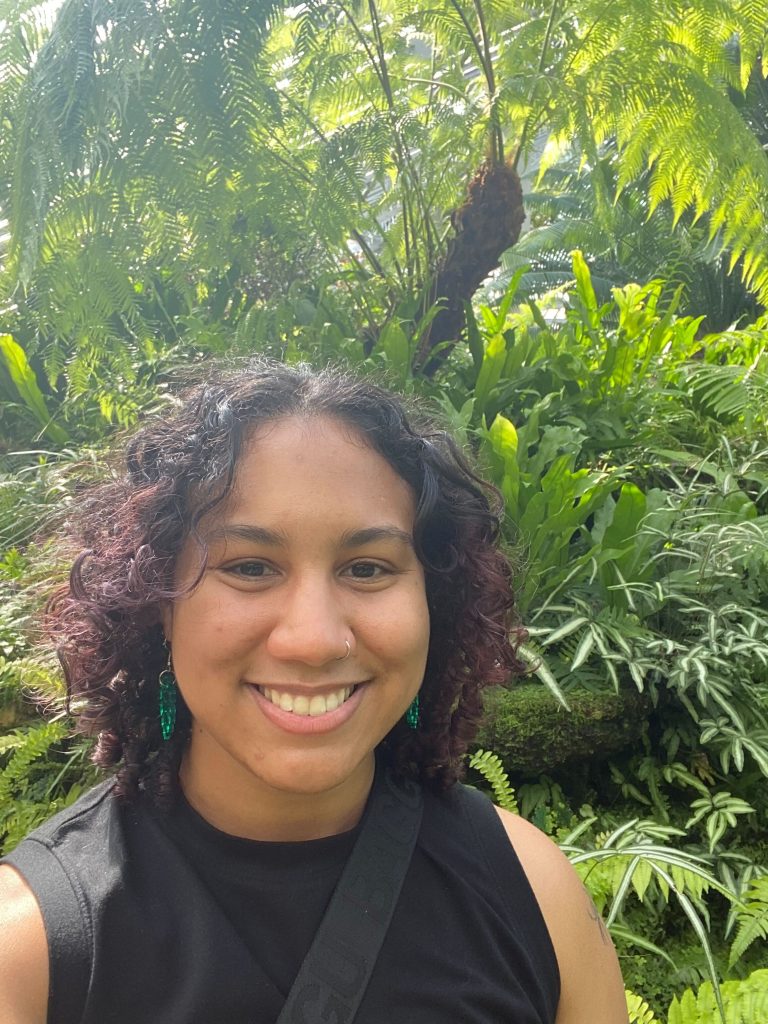
Paradyse is a disease ecologist and is a Postdoctoral Fellow in Marine Host-Parasite Dynamics with the Sentinels of Change Alliance. Paradyse is interested in how anthropogenic stress (e.g., climate change, salinity) influences host-parasite interactions. At UBC, they are using field and lab experiments to explore how climate change and environmental variation are connected in determining parasitic infection dynamics in intertidal marine invertebrates in the Salish Sea. Outside of the lab, Paradyse enjoys nature walks, reading, or hanging at cafes.
Tara Brudar (She/Her) | BSc Student, Ocean Acidification Research and Outreach Assistant

I’m an upper-level undergraduate student studying Natural Resources Conservation at UBC’s Faculty of Forestry and Environmental Stewardship! In my role at the Harley Lab, I work alongside graduate and faculty members to support laboratory research determining the effects of ocean acidification on BC shellfish, including vulnerability to additional threats like heatwaves and predators. I am also involved in communication and outreach on the topic of ocean acidification in BC, focusing on knowledge dissemination through social media, presentations/seminars, and collaborations with local non-profits. In my spare time, you’re most likely to find me skiing at the local mountains or outside with my camera!
Connor Church (He/Him) | BSc Honours student

Connor is a 4th year undergraduate student studying Biology. He is interested in how climate change impacts marine ecology and is a big fan of the rocky intertidal zone. His Honours thesis focuses on the influence of changing salinity on prey choice and sensory detection in the Hairy Hermit Crab Pagurus hirsutiusculus. He also enjoys hiking, comic books, and inaturalist.
Joshua Dyer (He/Him) | MSc Student

Joshua is a MSc student in the Department of Forest and Conservation Sciences in UBC’s Faculty of Forestry and Environmental Stewardship. His current research investigates the effects of ocean acidification and other co-occurring climate stressors (e.g., predation by invasive species, hypoxia) on Dungeness crabs (Metacarcinus magister). Josh also received his BSc in Environmental Sciences from UBC in 2024, during which his undergraduate research focused on competitive coexistence, character displacement, and coevolution. Josh is particularly interested in exploring the ecological consequences of climate change and other anthropogenic pressures on Earth’s biodiversity and hopes to obtain a career where he can inform conservation efforts for species at risk of extinction.
Email: joshdyer@student.ubc.ca
Georgia Hall (She/Her) | MSc Student
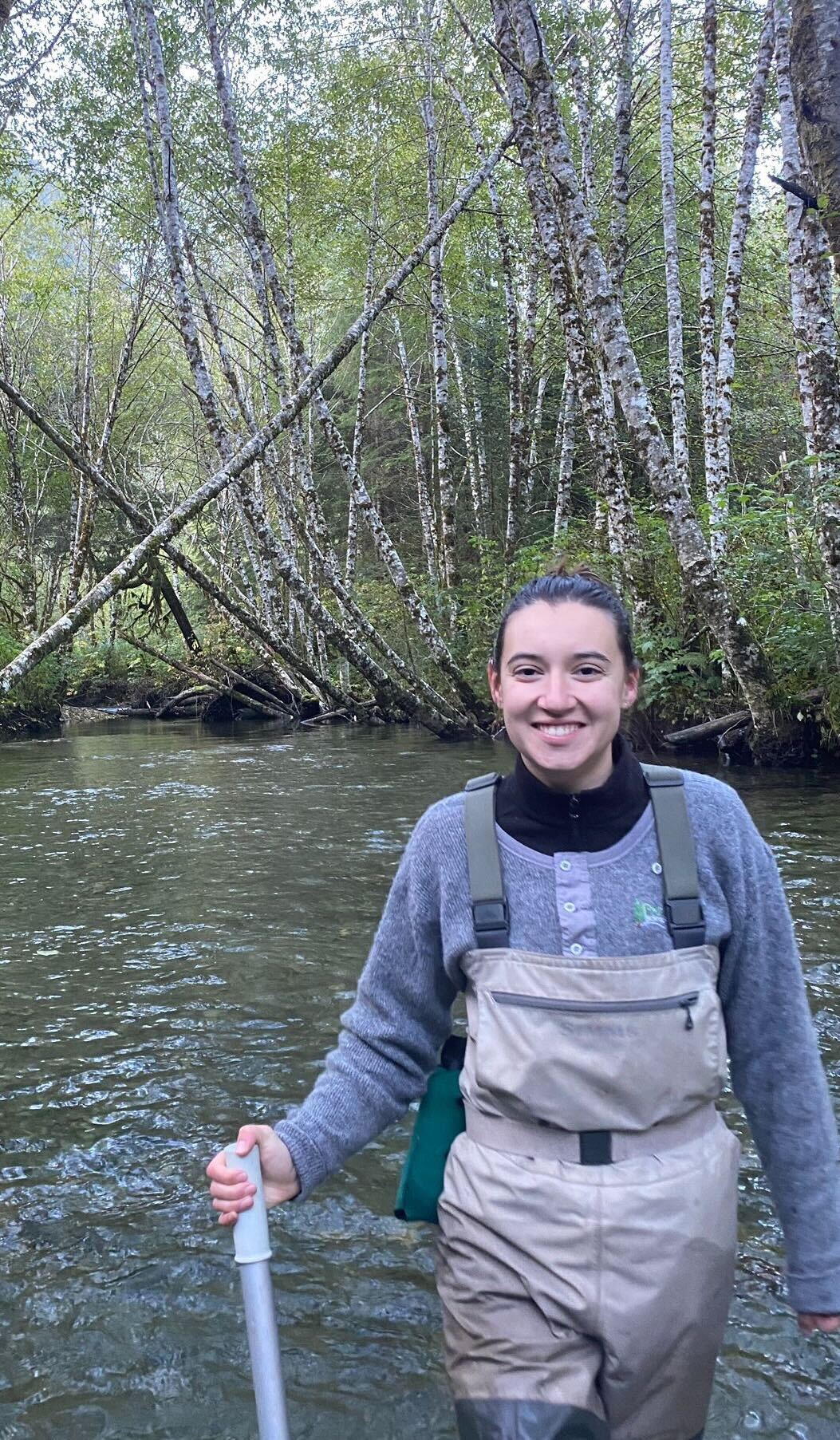
Georgia is a forestry grad who recently did a 180⁰ and ended up in the ocean. While she now splits her down time between the forests and the beach, she is excited to be studying the marine side of things for a change. Her research examines the effects of ocean acidification on Pacific oysters and bay mussels. More specifically, whether a more acidic ocean will make these shellfish more susceptible to predation and atmospheric heatwaves. She hopes to better understand the complex interactions between changing ocean chemistry, predator-prey dynamics, and a warming climate to help inform resource managers and the aquaculture industry. In her spare time, you can find her curled up with a book, baking, or somewhere out in the West Coast rain.
Email: g.hall@zoology.ubc.ca
Sophie Johnston | PhD Student
Sophie was inspired by the complexity of marine systems while writing her undergraduate thesis on albatross species interactions along a gradient of ocean productivity. Her current research investigates how mutualistic symbioses in the intertidal zone respond to acute and long-term thermal stress; she primarily studies the response of sea anemones and their algal endosymbionts to simulated heatwaves. She is also interested in the interacting effects of ocean acidification and extreme temperature stress on coastal community dynamics. When she’s not forgetting to add a + sign to a ggplot object, she loves the same things most Ontarian’s– attracted to the west coast do: hiking, swimming, reading, baking, and gardening.
Kat Kabanova (She/Her) | MSc Student

Kat is a graduate student who journeyed coast to coast, from studying sea cucumbers in Nova Scotia to working with brachiopods in beautiful British Columbia. Brachiopods (otherwise known as lamp shells) are living fossils that used to dominate Paleozoic oceans, but have since decreased in both diversity and abundance. Kat’s research utilizes scientific SCUBA and laboratory experiments to understand lamp shell bioenergetics and their population structure. This work will shed light on brachiopod vulnerability to climate change – particularly, ocean warming. Aside from science, Kat likes to ride a bike, play capoeira, surfskate, spend time with her loved ones, and expand – through dialogue and experiences – her understanding of the world and our place within it.
Kevin C. K. Ma (He/Him) | Postdoc
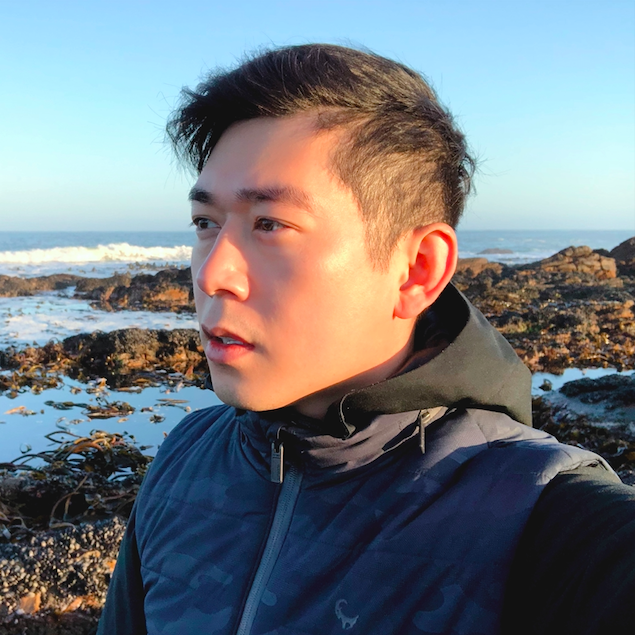
Kevin is passionate about the ecology of intertidal habitats and is excited to collaborate with Harley, Gehman, and the Black and White Tile team at the Hakai Institute. His work focuses on uncovering the patterns and processes that shape intertidal biodiversity in the Salish Sea, with a particular interest in understanding how this system responds to the effects of climate change.
Carl Ng (He/Him) | Postdoc

I am an experimental biologist passionate about exploring how phenotypic plasticity shapes fitness outcomes through physiological trade-offs across environmental gradients. My research investigates the eco-physiological mechanisms that govern developmental trajectories, species persistence, and ecological interactions under climate change, with a particular focus on thermal plasticity.Using intertidal invertebrates (Dungeness and European green crabs) as model systems, I combine climate-controlled experiments with long-term biodiversity monitoring in the Salish Sea to explore how warming, hypoxia, acidification, and species invasions interact with species physiology to influence coastal resilience and climate vulnerability.When I am not chasing after crabs or running respirometry trials, I slow down to ponder the meaning of existence-and bend to the will of my suspiciously human-like cat.
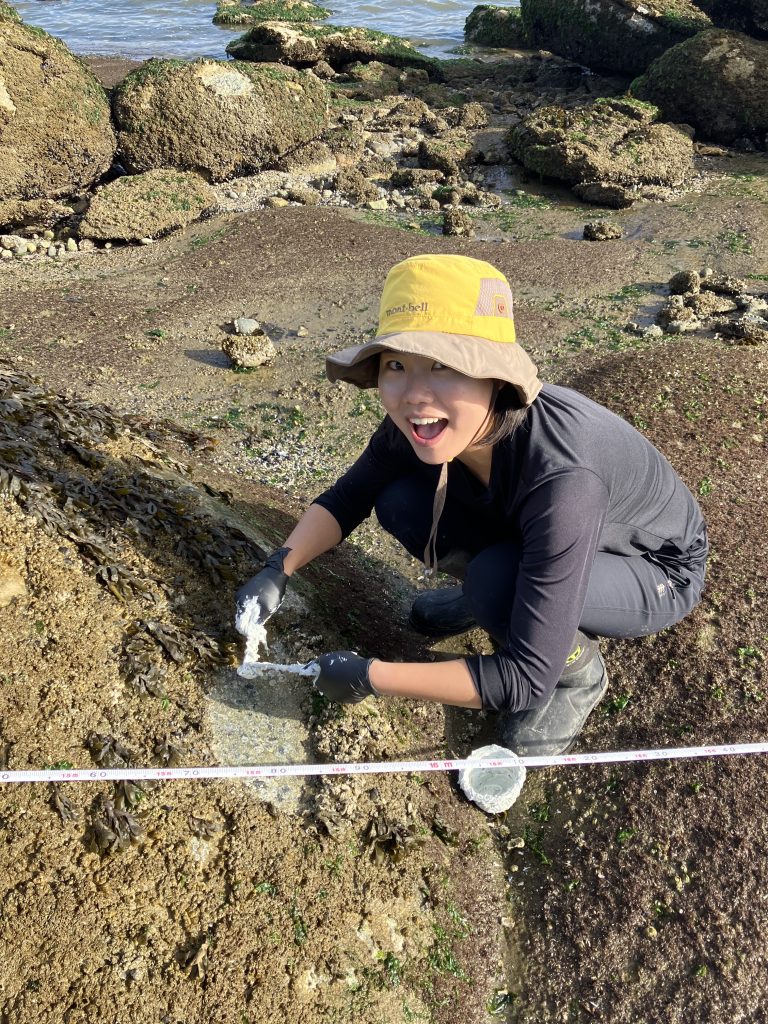
I’m curious about how marine ecosystems function under climate change and human activities.
Working along British Columbia’s stunning coasts, I feel incredibly lucky to align my passion with my work. My research focuses on foundation species, like barnacles and seaweeds, and key interactions, such as grazing between snails and algae in rocky intertidal zones. While many study the impacts of heatwaves, I’m intrigued by the opposite extreme—how cold snaps shape intertidal species. Low temperatures play a critical role in species distributions, often setting the leading edge for migrations from lower latitudes. I’m also interested in monitoring long-term ecosystem changes to predict future trends and support conservation efforts.
After work, I enjoy chatting, reading, writing, watching movies, listening to music, and working out. My ultimate goal isn’t directly related to science but to be healthy while maintaining a kind and grateful attitude toward the world and to become strong enough to complete a triathlon.
email: sjpark@zoology.ubc.ca
Natalie Rivlin | PhD Student
Julie Sieg (She/Her) | BSc Honors Student

Julie is a 4th year biology student doing her Honours in the lab. She studies how the prey preference of intertidal omnivores are being affected by increasing temperatures. In particular, she studies the shore crab Hemigrapsus oregonensis and spends most of her lab life trying not to get pinched by them. When she’s not giving blood sacrifices in the intertidal, she can be found making a machine learning model to identify butterflies, reading fantasy novels, or complaining loudly about minor inconveniences.
Nic Valdes (He/Him) | BSc Honors Student

Nic is a fourth year biology undergraduate from south Texas who is enjoying the temperate and rainy Vancouver coast to the fullest. He is writing his Honours thesis on the hairy shore crab Hemigrapsus oregonensis and the European green crab Carcinus maenas. Outside of the lab, Nic spends his time stressing over the Seattle Seahawks, playing Pokemon, and singing as the primary bass for Eh? Cappella, one of UBC’s two competitive a cappella groups.