Whaling was pretty brutal: In the early days it was
brutal for the whalers. Later, for the whales.
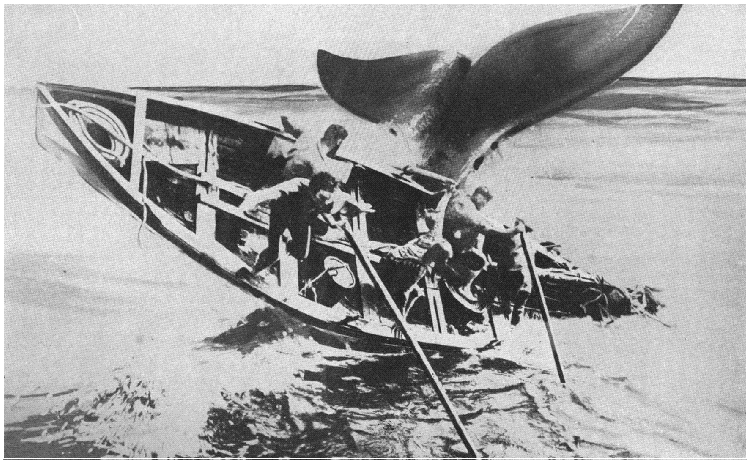
This image shows a Yankee whaleboat being tossed by probably a Sperm
Whale fluke. I believe this was originally a photograph. I got it from
a site back east, one of the aquariums or museums. I'll put that link in
when I get a chance.
The Americans invented hunting whales from big boats when some guy figured he could boil blubber at sea. It started on sailing vessels in the late 1700's, and the main target was the Sperm Whale.
These boats would go out for years at a time. Sailing around the world,
looking for whales so they could fill up barrels with oil and take them
back to Nantucket. Read Mellville's Moby Dick. It's one of the best references
on this period of whaling

This photograph is from an article by Gordon Pike in the Canadian Geographical Journal. Pike started his career at DFO as a junior biologist responsible for overseeing operations by the coastal whaling stations that operated in BC between 1905 and 1967.
Canada never had a pelagic whale fishery. But land based whaling stations operated on both coasts at the turn of the century. These stations operated with catcher boats that went out for days at a time, and brought the kills back to land stations for processing. The east coast whale fishery was already experiencing a shortage of animals and many stations were closing down when the first station opened in BC in 1905 at Sechart, in Barkley Sound.
At the peak of BC whaling, there were 12 (I think, again, I'll check)
catcher boats operating from 3 different stations. The heydays were all
over by the 1930's. When whaling resumed after the Second World War, whales
were already becoming scarce. The final chapter was written at Coal Harbour,
in Quatsino Sound, the location of the last whaling station in the Pacific
Northwest that operated between 1948 and 1967.
Two really good books on the history of BC whaling (soon to be on the
reference list).